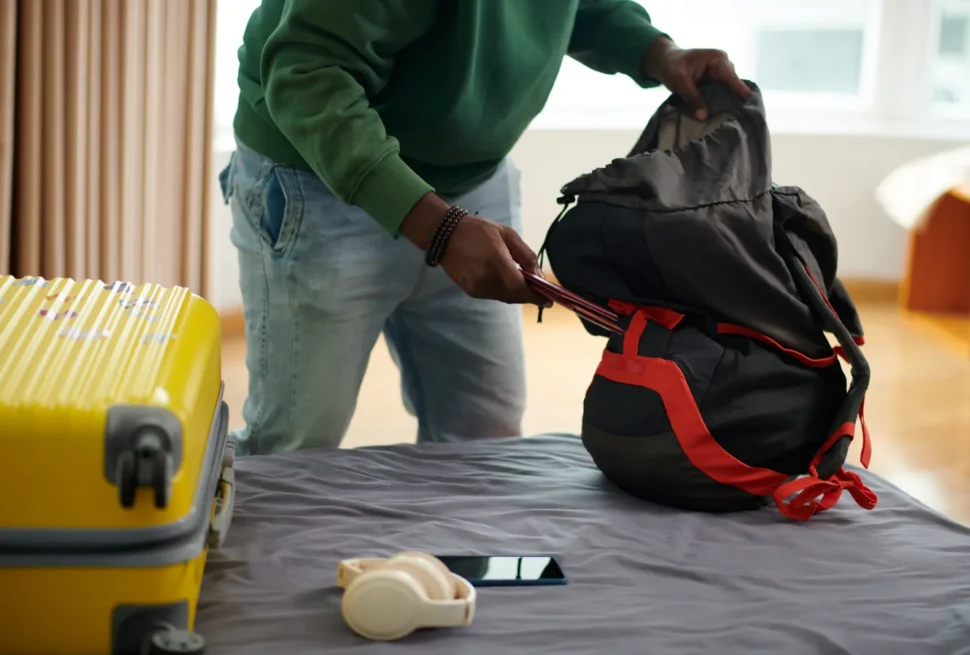
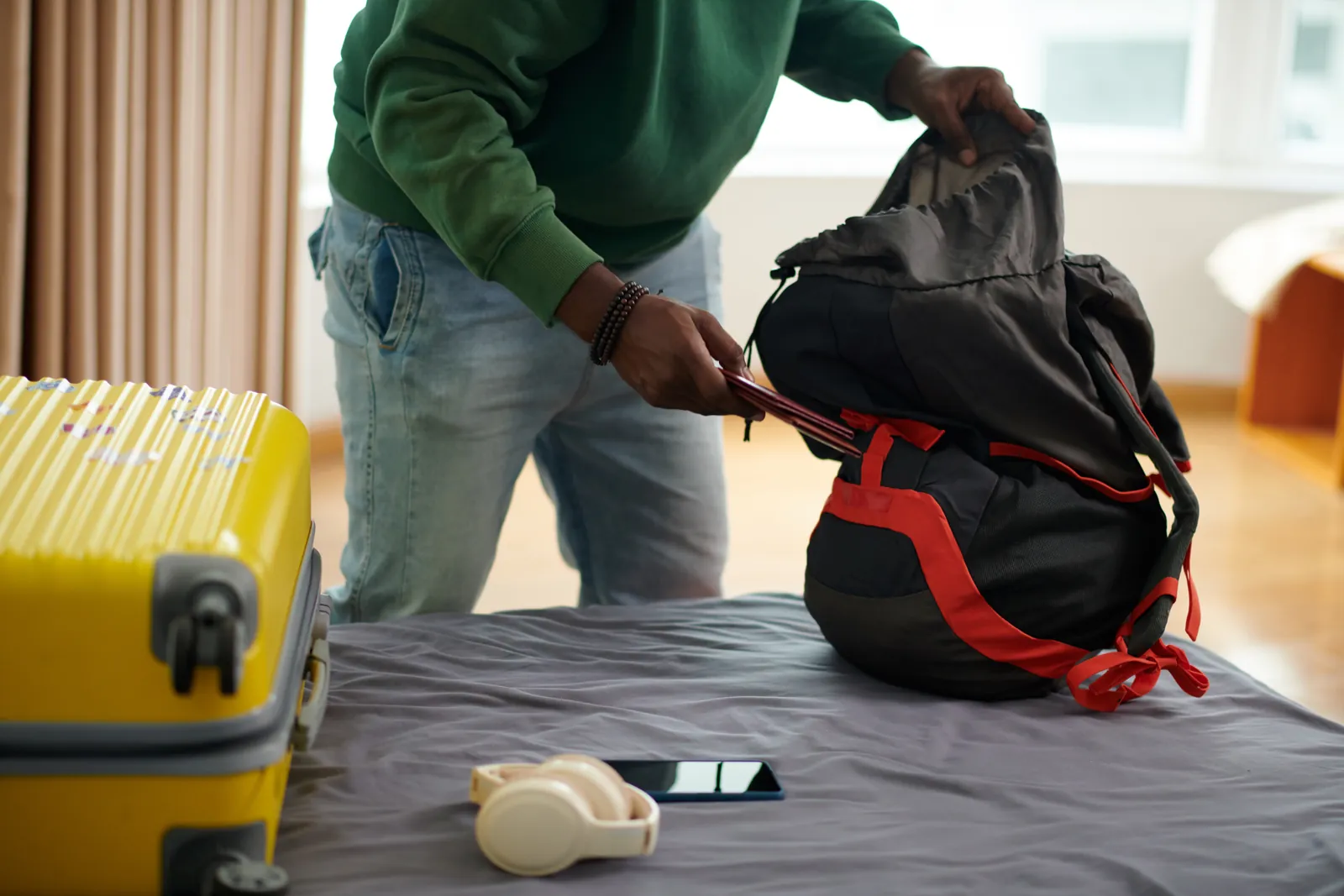
Packing is one of the first parts of a school trip you can take charge of yourself. The goal is a bag you can carry comfortably, a few outfits that work together and the essentials where you can find them when you need them.
Start with the itinerary. A language programme based in a city calls for different choices from an outdoor field course, and a long transfer day deserves its own small packing plan.
Use this checklist with your school's instructions and the likely weather. You probably already own much of what you need; check any specialist requirements before buying expensive equipment.
Check the rules before choosing the bag
Find out what your ticket allows for checked baggage, a cabin bag and a personal item. These are not universal categories with identical allowances. Confirm the operating airlines, any connecting flights and the fare conditions rather than copying a friend's packing limit.
Air Canada's carry-on guidance, for example, distinguishes allowances by itinerary and fare. That is one airline's policy, not a rule for every school group. Check the actual booking and recheck before departure.
Look beyond the flight. You may need to move your luggage through stations, along pavements or into accommodation. Ask whether there are restrictions on coaches or internal transfers. Try carrying the packed bag at home and remove anything you are unlikely to use.
Put your name and an appropriate contact method on luggage according to school instructions. Avoid displaying a minor's home address and full personal itinerary on the outside of a bag.
Carry-on essentials: pack for the journey and a delay
Keep critical items accessible in the cabin, within your permitted allowance. A checked suitcase may not be available during a connection or immediately after arrival. Prepare for an ordinary travel delay without packing a second full holiday wardrobe.
- Passport and required original travel documents, held under the school's agreed procedure.
- Boarding information and the group contact details in an accessible format.
- Required medication and medical supplies, with appropriate documentation.
- Glasses or other essential personal aids.
- Phone, charging cable and an approved power bank if permitted.
- A small change of clothing and essential toiletries within security rules.
- A light layer for changing temperatures.
- A refillable water bottle, empty when required at security.
- A suitable snack if allowed by the school, airline and border rules.
- A pen and small notebook for practical details or learning notes.
Keep a small pouch available if your cabin bag has to be checked at the gate. Ask staff what must be removed, particularly medication, travel documents and power banks.
Clothing: build outfits around the itinerary
Choose items you can combine and wear comfortably for the actual activities. Count the days, check laundry possibilities and allow for changes in weather. A daily outfit plan is often more effective than adding extra clothes without a reason.
For an ordinary urban educational itinerary, consider:
- Comfortable trousers or other suitable everyday clothing.
- Tops that can be layered.
- Enough underwear and socks for the plan, including laundry arrangements.
- A weather-appropriate outer layer.
- A light sweater or fleece.
- Sleepwear appropriate for shared accommodation.
- Comfortable, already-worn walking shoes.
- Any clothing specifically required for a workshop, cultural site or formal visit.
Ask about clothing expectations before departure, including religious or cultural sites and practical workshops. If protective equipment is required, confirm what is supplied rather than improvising it.
Wear the walking shoes for a normal day before packing them. A pair that feels fine indoors may be uncomfortable after a long day. Keep bulky “special occasion” items out unless the itinerary justifies them.
Toiletries and airport screening
Use small quantities of everyday products rather than carrying full-size containers for a short trip. Keep items that might leak in a separate pouch and consider what you can share appropriately without sharing personal hygiene products.
For Canadian screening, CATSA's liquids guidance generally limits cabin liquids, aerosols and gels to containers of 100 mL or 100 g or less, fitting into one clear resealable bag of no more than one litre. Exemptions apply, including certain medically necessary items. Check the guidance for your items and any different rules at other airports.
A toiletry checklist might include a toothbrush, toothpaste, deodorant, personal care products and any needed menstrual supplies. Pack sunscreen appropriate to the destination and your own needs. Check the school's instructions before adding sharp tools or aerosols.
Remember that security clearance and permission to bring something across a border are different questions. A food item allowed through screening may still be restricted at the destination.
Medication needs a separate plan
Keep essential medication identifiable, even when you are trying to save space. Government of Canada medication guidance recommends original labelled containers and cabin carriage, and notes that medicines legal in Canada may be restricted elsewhere.
Families should confirm destination requirements and discuss individual needs with a healthcare professional. Include the school's arrangements for holding, accessing and administering medication in the student's support plan.
Tell the responsible adult privately about any unresolved issue before the final packing night. Some matters require documentation, storage planning or coordination with the carrier. Arrange the necessary supply before leaving.
Devices, adapters and power banks
Choose the devices you will actually use. Check school rules for phones, photography and use during activities. Download permitted practical information before departure so it is available without mobile data.
A plug adapter changes the connection shape; voltage compatibility is a separate check in the appliance's instructions. Check the device's own instructions and ask a knowledgeable adult if you are unsure. Avoid packing a high-powered appliance simply because an adapter fits it.
CATSA's battery guidance places power banks in cabin baggage. Capacity, condition and airline rules still matter, so verify the exact item and whether onboard use or charging is permitted. Do not pack a damaged or recalled device.
Agree a charging routine with roommates that does not create cables across walking routes. Keep enough battery for the group's communication arrangements rather than using all your power on entertainment during a transfer.
Leave space for learning, not unnecessary valuables
A small notebook can be useful for questions, sketches and observations. Bring any school-issued materials that are genuinely needed, but ask whether heavy textbooks or laptops are necessary. A phone can support a task without needing to document every moment.
Leave expensive jewellery and irreplaceable sentimental items at home where possible. Do not bring prohibited items, and do not carry anything for another person without understanding what it is and whether it is permitted.
Keep some space in the bag for repacking. Clothing rarely returns as neatly folded as it left. A separate bag for worn clothing makes shared accommodation easier to manage.
The final packing rehearsal
A few days before departure, pack the bag yourself. Walk with it, locate your documents and find your essentials without unpacking everything. Check weight and size using the actual carrier's rules.
Ask yourself three questions: What must stay accessible? What can I remove? What still needs confirmation? Share the last category with your parent, guardian or group leader while there is time to act.
Once your bag is manageable, turn back to the experience ahead. Explore Majole's London English on the Go Summer School if language learning interests you, and use the trip preparation page to gather questions about the activities and clothing your own programme will need.