
You can be excited about a school trip and still wonder who you will sit with at dinner, what airport security is like or whether you will sleep well in a shared room. Looking forward to the experience and feeling a little uncertain can happen together.
You don't need to have every answer now. Understanding the everyday routines, practising a few skills and knowing who can help gives you something practical to work with.
This guide offers ideas for first-time travellers and the parents and teachers supporting them. For worries that are intense, persistent or affecting daily life, involve a trusted adult and an appropriate healthcare professional.
Name the part that feels unfamiliar
“I'm nervous about the trip” can cover several different concerns. Try finishing a more specific sentence: “I don't understand airport security,” “I'm worried about sharing a room,” or “I don't know how to explain my food allergy.”
Specific questions are easier to act on. A teacher can explain the airport routine. A parent can help you practise packing. A health concern needs a private conversation and an agreed plan rather than encouragement to ignore it.
The Government of Canada's mental health travel guidance notes that unfamiliar situations and disrupted routines can affect wellbeing. It recommends planning support and obtaining individual advice where needed. You do not have to wait until departure to ask for that support.
Make two short lists: things you can practise and things an adult needs to clarify. Keep them realistic. You do not need to solve the whole journey at once.
A preparation plan for the weeks before departure
Use these stages flexibly with your school and family. Move through them at a pace that gives you time to ask questions and practise.
Stage 1: understand the shape of the trip
Read the itinerary together and identify travel days, structured activities, accommodation changes and rest periods. Ask what an ordinary morning and evening will look like. Knowing the routine can be more helpful than studying every attraction.
Find out who your first contact will be if something goes wrong. Ask how to speak privately with an accompanying adult and what happens if you feel unwell during an activity.
Choose one thing you are curious about. It could be a subject, a place or a question you want to explore. A small, genuine question is a worthwhile place to begin.
Stage 2: practise everyday independence
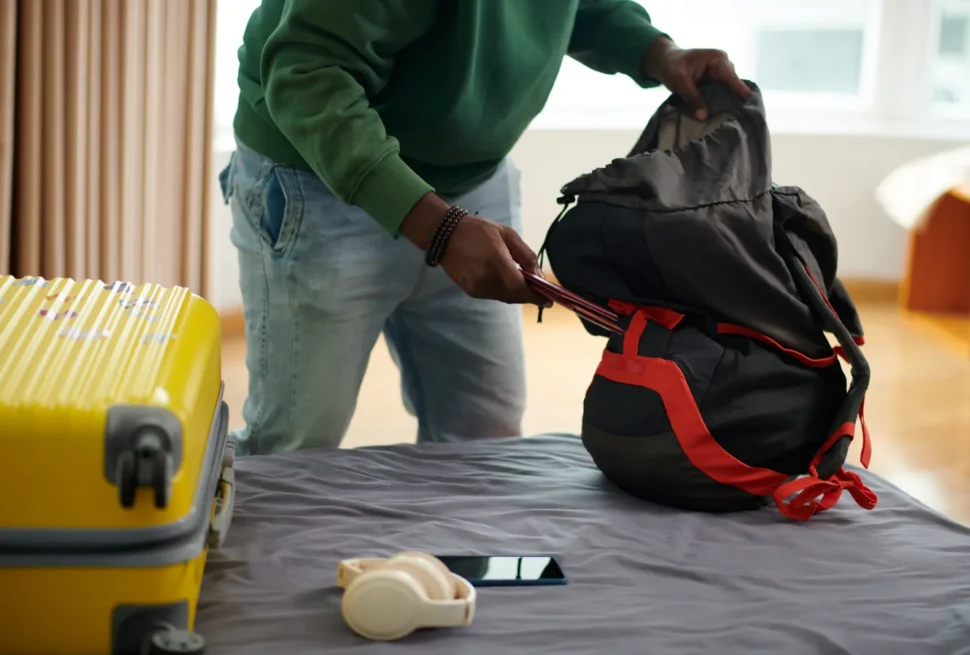
Pack and repack your own bag. Set an alarm, organize the items needed for a day and practise keeping track of a small amount of money with adult guidance. Ask a parent to let you do the task rather than silently fixing everything for you.
Practise a few useful phrases for the destination if relevant: a greeting, a polite request and how to ask for help. Accuracy matters less here than knowing when to seek clarification instead of pretending to understand.
Check how you will manage your phone, charger and contact information. Save the approved details in a form you can access if the internet is unavailable.
Stage 3: agree the support and communication plan
Discuss check-ins with home, including time differences and times when students will be busy. Agree that a delayed routine message will not automatically be treated as an emergency; the group should have a separate urgent-contact procedure.
Tell the school privately about support needs through its approved process. Check that the accompanying team has the relevant information and understands the arrangements agreed for you.
Use the final briefing to close practical gaps. Leave with clear instructions, not an unspoken worry that everyone else seems to understand more than you do.
Know what to do at the airport
Ask the group leader to explain the sequence: meeting, check-in, security, waiting, boarding and arrival. Keep your documents where the school has instructed and listen for the next step before moving away.
At security, follow the officers' directions and ask if you do not understand. Prepare your bag under current screening rules rather than learning them while holding up a queue. The school's packing instructions should cover what needs to remain accessible.
After security, stay within the agreed boundaries. A boarding pass does not mean you have unlimited time to wander. Know the meeting point, the required return time and the adult to contact if there is a problem.
A hypothetical example: your cabin bag is selected for additional screening. Tell the responsible adult and follow the officer's instructions. A routine check is a situation to communicate about, not a reason to leave the group or feel embarrassed.
Try a small rehearsal at home: pack your day bag, find the contact card and explain what you would say if you needed a quiet conversation with the group leader. A parent can ask a practical question while you find the answer yourself. Treat it as practice, with room to pause and ask for help, rather than a test you have to pass.
Make shared travel easier
Group travel means living alongside people with different habits. Talk about alarms, charging devices, noise, bathroom use and keeping shared space manageable. Small agreements are easier before everyone is tired.
Be considerate without accepting behaviour that makes you feel unsafe. If there is bullying, exclusion or a boundary problem, tell an accompanying adult promptly. You do not have to solve it alone to prove independence.
Leave room to get to know different classmates during the trip. Invite someone into a conversation or learning task, but do not pressure classmates to share personal information or appear in photographs.
When something irritates you, describe the practical issue rather than labelling the person. “Can we agree a lights-out routine?” gives the group something to resolve. Ask for adult help when an agreement is not working.
Prepare for unfamiliar food and places respectfully
Learn a little about everyday customs before departure. Ask how to behave in the places the group will visit, especially religious, memorial or academic settings. Observe and ask respectful questions rather than treating unfamiliar habits as a performance for visitors.
You can participate thoughtfully even when a particular food or activity is not your favourite. If you have a dietary or medical requirement, use the agreed support plan. If something is simply unfamiliar, you can describe it neutrally without making classmates or hosts uncomfortable.
Keep the learning question in view. A museum may be busy, a street may be noisy and the weather may change. The day can still offer something to investigate without pretending that every moment is perfect.
Let home support the journey
Parents can ask specific, open questions: “What did you notice today?” or “Is there something you need help with?” Avoid making every call a test of whether the student is having the best experience of their life.
If a student reports a concern, listen and work through the agreed school communication route. An adult at home may not have the context or ability to solve an immediate issue from another time zone. The accompanying team needs the information required to respond.
Students should tell an adult nearby when they need help, rather than relying only on a message home. If distress becomes overwhelming or there is a safety concern, seek prompt assistance through the group's established procedure.
A personal readiness check
Before departure, make sure you can answer these questions:
- Where are my essential documents, and who is responsible for them?
- Who can I approach privately during the trip?
- What should I do if I become separated from the group?
- What are the rules for independent time and meeting points?
- How will I manage medication or other agreed support needs?
- When can I contact home, and what is the urgent-contact route?
- What is one useful question I want to explore?
Your first trip is a chance to explore at your own starting point, with questions welcome along the way. Browse Majole's Parents & Students guidance together, or look at the Vancouver English on the Go Summer School if language learning interests you. Ask the team about the programme's day-to-day arrangements.